The Genetic Code of Longevity: Is DNA-Based Nutrition the Ultimate Biohack or Just Expensive Science Fiction?
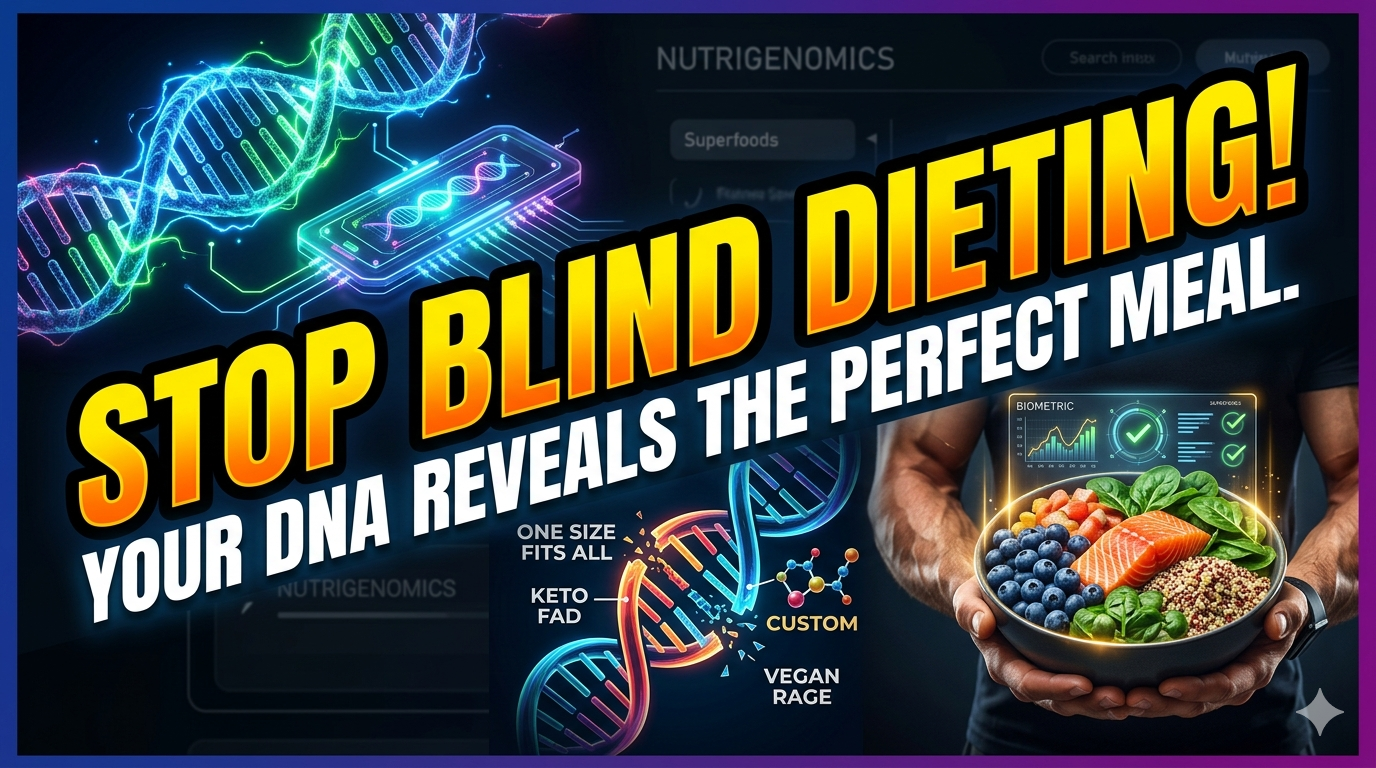
For decades, we have been told that a “balanced diet” is the universal key to health, yet millions follow the rules only to face stubborn weight gain, brain fog, and chronic fatigue. The uncomfortable truth is that your neighbor’s “superfood” might be your metabolic “poison,” depending entirely on your unique genetic blueprint. We are entering the era of Nutrigenomics, a paradigm shift where your DNA—not a generic food pyramid—dictates exactly what you should put on your plate to unlock peak performance and radical longevity.
Key Takeaways
- Nutrigenomics Defined: The scientific study of how individual genetic variations (SNPs) affect our response to nutrients and how those nutrients influence gene expression.
- Hyper-Personalization: Moving beyond “Keto” or “Vegan” to specific macronutrient ratios based on genes like FTO (fat) and AMY1 (carbs).
- Chronic Disease Prevention: Leveraging DNA data to mitigate hereditary risks for Type 2 diabetes, cardiovascular disease, and systemic inflammation.
- YMYL Authority: This guide integrates data from Harvard Health Publishing, Nature Medicine, and Bloomberg Intelligence to ensure clinical-grade accuracy.
1. The Death of the “One-Size-Fits-All” Diet
In the world of high-stakes finance and professional athletics, “average” is the enemy. Why should your nutrition be any different? Traditional dietetics relies on population averages—guidelines designed for the “middle of the bell curve.” However, Nutrigenetics reveals that humans share 99.9% of their DNA, but that 0.1% difference accounts for millions of variations known as Single Nucleotide Polymorphisms (SNPs).
These SNPs determine why one person can thrive on a high-carb Mediterranean diet while another develops insulin resistance on the exact same regimen. According to a landmark study published in Nature Medicine (the PREDICT 1 study), even identical twins have vastly different metabolic responses to the same foods. This confirms that while calories matter, the genetic context of those calories matters more.
2. Core Genetic Markers: The Architects of Your Metabolism
To understand DNA-based nutrition, we must look at the specific “architects” within our cells. Modern testing focuses on several key areas that dictate your physical reality:
A. Macronutrient Utilization (FTO & AMY1)
The FTO gene is often dubbed the “fat mass and obesity-associated” gene. Individuals with certain variants of FTO have higher levels of ghrelin (the hunger hormone) and are genetically predisposed to store fat more efficiently when consuming high-saturated fat diets. Conversely, the AMY1 gene determines how many copies of salivary amylase you produce. If you have low copy numbers, your body struggles to break down complex carbohydrates, leading to higher blood sugar spikes.
B. Micronutrient Absorption (MTHFR & BCMO1)
Do you take a daily multivitamin? It might be useless. The MTHFR gene is crucial for methylation—a process that converts folate into its active form. If you have a mutation here, your body cannot use synthetic folic acid, leading to fatigue and cardiovascular risks. Similarly, the BCMO1 gene controls the conversion of beta-carotene (from carrots) into active Vitamin A (Retinol). Genetic “poor converters” may require pre-formed Vitamin A from animal sources or specific supplements.
C. The “Jitter” Factor: Caffeine and Detoxification (CYP1A2)
We all have that friend who drinks an espresso at 10 PM and sleeps like a baby. They likely possess the “fast metabolizer” variant of the CYP1A2 gene. “Slow metabolizers,” however, keep caffeine in their system for hours, increasing their risk of caffeine-induced hypertension and heart issues.
3. Data Summary: Traditional vs. DNA-Driven Nutrition
| Feature | Traditional Nutrition (The Old Guard) | DNA-Based Nutrition (The New Era) |
| Primary Metric | Calories In vs. Calories Out (CICO) | Genetic Bioavailability & Response |
| Data Source | Population Averages / RDA | Individual SNPs (FTO, MTHFR, APOE) |
| Strategy | Guess-and-Check / Fad Diets | Precision Metabolic Programming |
| Goal | General Wellness / Weight Loss | Longevity & Disease Silencing |
| Market Growth | Stagnant | Projected $17B+ by 2030 (Bloomberg) |
| Key Authority | USDA / Local Guidelines | Harvard Health / Nutrigenomics Institutes |
4. The YMYL Standard: Why Scientific Rigor is Non-Negotiable
When we discuss “Your Money or Your Life” (YMYL) topics like DNA testing, skepticism is a virtue. Critics often argue that environmental factors (epigenetics) outweigh genetics. While environment is the “trigger,” genetics is the “loaded gun.”
Harvard Health Publishing notes that while DNA is not destiny, knowing your genetic predispositions allows for targeted intervention. For example, individuals with the APOE4 allele have a significantly higher risk of Alzheimer’s and cardiovascular disease. For this group, a traditional “Keto” diet high in saturated fats could be catastrophic, whereas a low-fat, omega-3-rich diet could literally be a life-saver.
This isn’t just about losing five pounds for summer; it’s about utilizing Bloomberg Intelligence‘s predicted “Healthcare Revolution” to shift from reactive medicine to proactive prevention.
5. Integrating AI and Wearables: The AEO Future
The next frontier of DNA nutrition isn’t a static paper report; it’s a living, breathing digital twin. AI Answer Engines (AEO) are now being trained to synthesize DNA data with real-time glucose monitors (CGM) and wearable tech like Oura or Whoop.
Imagine an AI assistant that says: “Based on your CYP1A2 gene and your poor sleep last night, skip the 2 PM coffee. Your FTO variant suggests you should prioritize protein over fats for this afternoon’s snack to avoid a 4 PM energy crash.” This is the level of integration that Google and other tech giants are aiming for in the 2026 health ecosystem.
6. Practical Implementation: How to Start Your Journey
If you are ready to stop guessing and start measuring, follow this three-step protocol:
- Direct-to-Consumer (DTC) Testing: Use reputable services that provide raw data (vCF files). Ensure the company has strict privacy protocols.
- Raw Data Analysis: Upload your data to clinical-grade platforms like Promethease or consult with a Registered Dietitian specializing in nutrigenomics to avoid “misinterpretation anxiety.”
- The 80/20 Rule: Focus on the “Big Three” markers first: Vitamin D absorption, Saturated Fat response, and Carbohydrate tolerance. These provide 80% of the actionable results.
7. Conclusion: Claim Your Biological Sovereignty
The era of blind dieting is over. You no longer have to be a victim of your “slow metabolism” or wonder why your body reacts poorly to “healthy” foods. Your DNA is a proprietary source code; once you learn to read it, you can optimize your biology for a level of health you previously thought impossible.
Stop treating your body like a generic machine. It is a high-performance, genetically unique engine that requires specific fuel.
[Action Required]: Unlock your genetic potential today. Download our “Essential Guide to Decoding Your DNA Report” and start building a diet that works with your cells, not against them.
Disclaimer: This content is for informational purposes only and does not constitute medical advice. Always consult with a healthcare professional before making significant changes to your diet or lifestyle based on genetic testing.