The DNA Diet Revolution: Is Genetic Nutri-Genomics the Final Frontier of Weight Loss?
The era of “one-size-fits-all” dieting is officially dead. While your neighbor might thrive on a high-fat ketogenic protocol, that same diet could be sending your cholesterol levels into a tailspin based purely on your genetic blueprint. By decoding your DNA, we are finally moving past guesswork and into a realm where your kitchen becomes a laboratory for longevity.
Key Takeaways
- Nutrigenomics is the study of how food affects your genes and how genetic variations affect your response to nutrients.
- Specific gene variants like MC4R (appetite) and FTO (fat storage) determine your success with specific macronutrient ratios.
- Personalized nutrition is a key pillar of YMYL (Your Money Your Life) health content, requiring high scientific rigor and clinical validation.
1. The Science of You: Understanding Nutrigenomics
Traditional nutrition focuses on the average. But as Harvard Health Publishing has frequently noted, the “average” human is a myth. Personalized nutrition, or nutrigenomics, examines the interaction between your dietary intake and your expressed phenotype.
We aren’t just talking about food allergies. We are talking about Single Nucleotide Polymorphisms (SNPs)—tiny variations in your DNA that dictate how you metabolize caffeine, how efficiently you absorb Vitamin D, and whether your body prefers burning carbohydrates or fats for fuel.
2. Key Genetic Markers Shaping Your Plate
To understand personalized nutrition, you must look at the “Big Players” in your genetic code. These markers are the primary drivers behind why some people lose weight on low-carb diets while others feel lethargic and bloated.
The Obesity Gene (FTO)
The FTO gene is perhaps the most well-researched variant regarding body mass. Individuals with certain FTO alleles may have higher levels of ghrelin (the hunger hormone), making it harder to feel full. For these individuals, a high-protein diet is often clinically recommended to suppress appetite more effectively.
The Carb-Processing Powerhouse (AMY1)
The AMY1 gene determines how much salivary amylase you produce. If you have fewer copies of this gene, your body struggles to break down complex carbohydrates, leading to higher blood sugar spikes and potential insulin resistance.
| Gene Marker | Biological Function | Dietary Implication |
| FTO | Fat mass and obesity-associated | Requires higher protein intake for satiety |
| MC4R | Appetite regulation/Snacking | Benefit from structured meal timing (Intermittent Fasting) |
| CYP1A2 | Caffeine metabolism | “Slow metabolizers” should limit caffeine to avoid heart risks |
| MTHFR | Folate methylation/B-Vitamin cycle | Needs methylated B-vitamins (leafy greens, supplements) |
| APOE | Cholesterol and Lipid transport | Low-saturated fat intake is critical for heart health |
3. Financial and Market Trends: Why Bloomberg is Watching
This isn’t just a health fad; it’s a multi-billion dollar industry. According to Bloomberg Intelligence, the personalized nutrition market is projected to reach staggering heights by 2030.
Investors are pouring capital into startups that combine At-Home DNA Testing (like 23andMe or AncestryHealth) with AI-driven meal planning apps. The convergence of biotechnology and consumer tech is creating a “health-wealth” ecosystem where preventative care through DNA-aligned eating reduces long-term healthcare costs.
4. Building Your DNA-Based Meal Plan
If you’ve received your genetic report, how do you actually eat? Here is how professional clinicians categorize the results into actionable pillars:
A. The “Lipid-Sensitive” Genotype
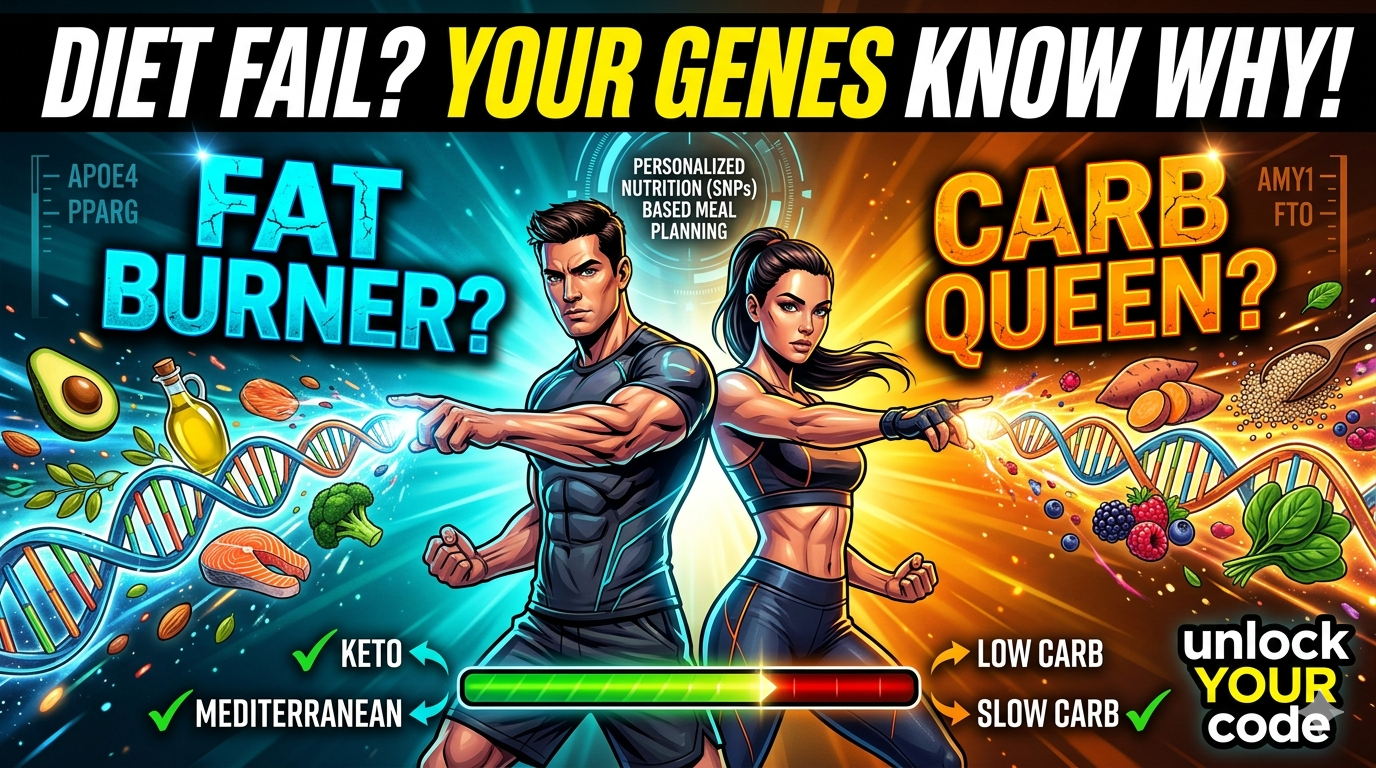
If your APOE4 or PPARG markers suggest sensitivity to saturated fats, the standard “Bulletproof” or “Keto” diet could be dangerous. Instead, these individuals thrive on a Mediterranean-style diet rich in monounsaturated fats (olive oil, avocados) and omega-3 fatty acids.
B. The “Carb-Efficient” Genotype
Those with high AMY1 copy numbers can handle “slow” carbs effectively. Their plates should look like a rainbow of glucose-stable complex carbohydrates: sweet potatoes, quinoa, and legumes.
C. Micronutrient Optimization
DNA testing often reveals “hidden” deficiencies. For instance, a variation in the BCMO1 gene can make it difficult for your body to convert beta-carotene (from carrots) into active Vitamin A (Retinol). If you have this variant, you must consume pre-formed Vitamin A from animal sources or high-quality supplements.
5. The Ethics and Efficacy: A Word of Caution
While the potential is vast, the “Vital Guide” approach requires honesty. DNA is not destiny; it is a predisposition. The Mayo Clinic emphasizes that epigenetics—how your environment and lifestyle “turn on or off” certain genes—is just as important as the code itself.
Just because you have the “obesity gene” doesn’t mean you are destined to be overweight. It simply means your “margin for error” with processed sugars is smaller than someone else’s.
6. Practical Steps to Get Started
- Test, Don’t Guess: Use a reputable clinical-grade DNA kit that focuses specifically on nutrigenomics (e.g., DNAfit, Nutriop, or specialized panels from your functional medicine doctor).
- Consult a Professional: Take your raw data to a registered dietitian who specializes in nutrigenetics to avoid misinterpretation.
- Audit Your Pantry: Cross-reference your “Red Flag” ingredients (like sodium if you have the AGT gene for hypertension) with your current staples.
- Track and Pivot: Use a bio-tracking tool (like a CGM or Oura ring) to see if your DNA-based changes are actually improving your biomarkers.
Conclusion: Your Genetic Blueprint is the Ultimate Roadmap
We are living in an era where “bio-hacking” is no longer for the elite. Personalized nutrition based on DNA testing is the most powerful tool we have to fight chronic inflammation, metabolic syndrome, and fatigue. Stop fighting your biology and start fueling it.
Are you ready to stop the dieting carousel and start eating for your unique code?
🚀 Take Action Now
Don’t let your data sit in a PDF. Download our “DNA Kitchen Audit” Checklist or book a consultation with a certified nutrigenomics specialist today to turn your genetic insights into a lifestyle that lasts.
Disclaimer: This guide is for informational purposes only and does not constitute medical advice. Always consult with a healthcare professional before making significant changes to your diet or exercise routine.