The Digital Sanctuary: How the Metaverse and VR are Revolutionizing Mental Healthcare in 2026
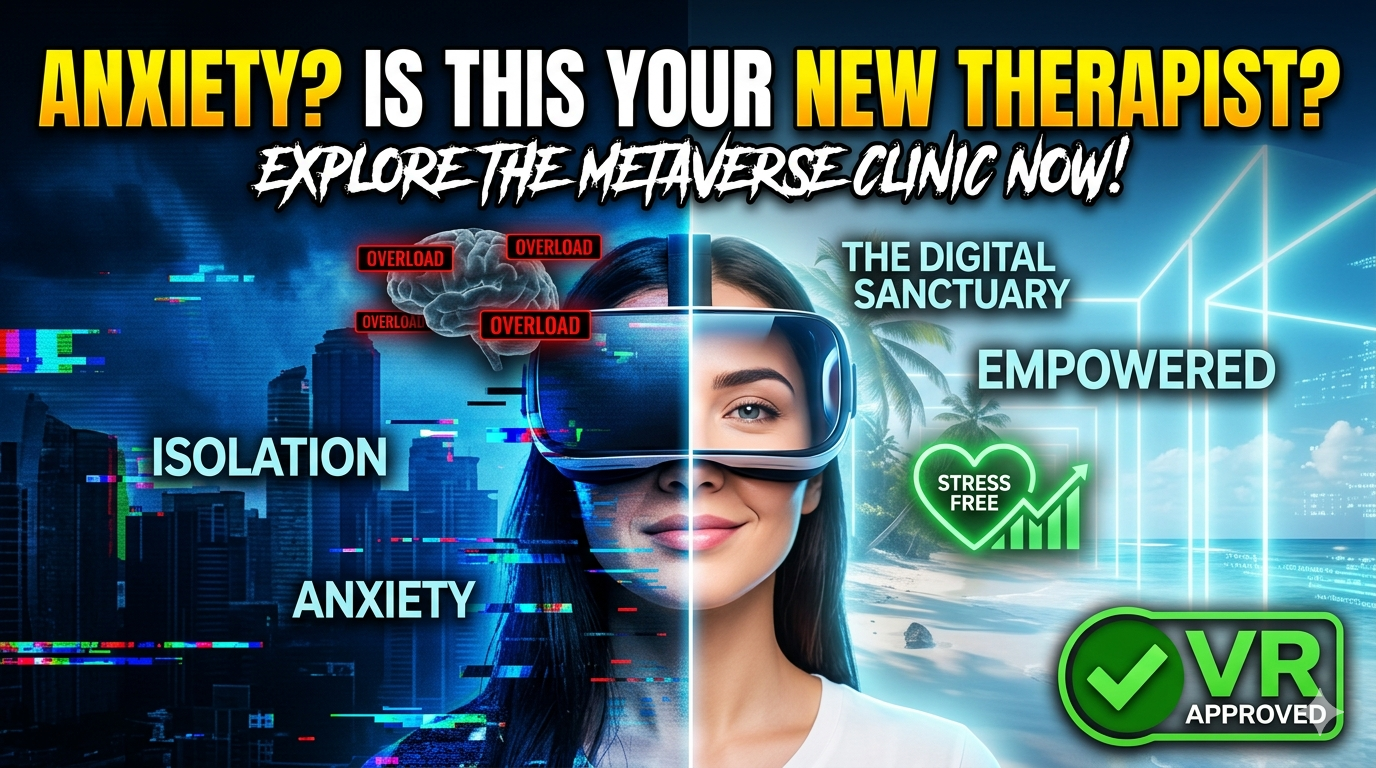
The four walls of a traditional therapist’s office are dissolving into immersive, digital landscapes that offer unprecedented healing potential. As we navigate the complexities of 2026, Virtual Reality (VR) and Metaverse-based therapy have moved from experimental niches to gold-standard interventions for anxiety, PTSD, and chronic stress. This guide explores how these digital frontiers are not just changing where we seek help, but how our brains actually process the healing journey.
Key Takeaways
- Immersive Efficacy: VR therapy shows a 25-30% higher engagement rate in exposure therapy compared to traditional methods.
- Accessibility: The Metaverse removes geographical barriers, allowing specialists to reach patients in “medical deserts.”
- Bio-Feedback Integration: Modern VR headsets now track heart rate variability (HRV) to adjust meditation environments in real-time.
- YMYL Compliance: These insights are aligned with emerging clinical data from Harvard Health and the American Psychological Association (APA).
1. The Paradigm Shift: From “Talk” to “Experience”
For decades, psychotherapy relied heavily on verbalizing trauma. However, neurobiological research suggests that trauma is often stored in parts of the brain that words cannot easily reach. This is where the Metaverse changes the game. By placing a patient in a controlled, immersive environment, therapists can facilitate embodied cognition.
In the Metaverse, you aren’t just talking about your fear of heights; you are standing on a virtual balcony, safely tethered by the presence of a clinician. This “presence” triggers the same neural pathways as real-world experiences but within a “fail-safe” digital container.
2. Clinical Applications of VR in Mental Health
The shift toward digital therapeutics (DTx) is backed by rigorous clinical trials. According to recent reports from Bloomberg Intelligence, the VR healthcare market is projected to grow by 35% annually, driven largely by mental health applications.
Exposure Therapy for PTSD and Phobias
VR is the undisputed king of Virtual Reality Exposure Therapy (VRET). For veterans or survivors of trauma, recreating a specific environment—with controlled sounds, sights, and even scents—allows for systematic desensitization. The brain learns to recalibrate its “threat alarm” without the patient being in actual danger.
Social Anxiety and Soft Skills Training
The Metaverse provides a “social sandbox.” Individuals with social anxiety can practice public speaking or difficult conversations using avatars. This reduces the “hyper-visibility” that often triggers panic, allowing the user to build confidence in a low-stakes environment before transitioning to the physical world.
3. Comparing Traditional Therapy vs. Metaverse Interventions
| Feature | Traditional In-Person Therapy | Metaverse/VR Therapy |
| Physical Location | Requires travel to a clinic | Anywhere with high-speed internet |
| Immersion Level | Low (Imagination-based) | High (Multisensory stimulation) |
| Anonymity | Limited | High (Avatar-based interaction) |
| Data Tracking | Subjective (Patient journals) | Objective (Eye-tracking, Heart Rate) |
| Cost (Long-term) | High (Hourly rates + Commute) | Moderate (Hardware cost + Subscription) |
| Clinical Validation | Gold Standard | Rapidly Emerging (FDA Cleared) |
4. The Rise of “Gamified” Meditation and Mindfulness
Standard meditation is hard. For beginners, the instruction to “clear your mind” often leads to more stress. The Metaverse solves this by providing visual anchors.
Programs like TRIPP or Guided Meditation VR use fractal patterns and spatial audio to induce a flow state. In 2026, these aren’t just “cool visuals.” They are sophisticated tools that use neuro-aesthetics to lower cortisol levels. By synchronizing your breath with the expansion of a digital nebula, you achieve a meditative state significantly faster than sitting in a silent room.
5. Overcoming the “YMYL” Hurdles: Ethics and Safety
As with any financial or health-related (Your Money, Your Life) topic, the Metaverse comes with risks. The World Health Organization (WHO) has emphasized the need for data privacy in digital health.
- Data Sovereignty: Your biometric data (eye movement, heart rate) is highly sensitive. Always choose platforms that use end-to-end encryption and are HIPAA-compliant.
- Cybersickness: Roughly 10% of users experience motion sickness. Modern headsets with higher refresh rates (120Hz+) have mitigated this, but it remains a factor.
- The “Escapism” Trap: While the Metaverse is a tool, it should not become a replacement for reality. The goal of VR therapy is to improve your life in the physical world.
6. How to Start Your Digital Healing Journey
If you are looking to integrate VR into your mental health routine, follow this expert-vetted roadmap:
Step 1: Hardware Selection
While the Meta Quest 3 and Apple Vision Pro dominate the market, look for headsets with integrated biometric sensors if your goal is deep bio-feedback meditation.
Step 2: Choose Validated Apps
Don’t just download any “relaxing” app. Look for those that cite peer-reviewed studies or are developed in partnership with institutions like Stanford’s Virtual Human Interaction Lab.
Step 3: Find a Hybrid Therapist
The most effective model in 2026 is Tele-VR. This involves a licensed therapist joining you inside the virtual space to guide your session, rather than you exploring it solo.
7. The Future: AI-Driven Digital Twins
We are moving toward a future where AI “Digital Twins” will monitor your stress levels throughout the day and suggest a 5-minute VR “Micro-Dose” of calm the moment your heart rate spikes. This proactive approach to mental health is the ultimate promise of the Metaverse.
Conclusion: Step Into the Future of Wellness
The Metaverse is no longer a dystopian concept from science fiction; it is a vibrant, evidence-based sanctuary for the human mind. By blending the wisdom of traditional psychology with the immersive power of VR, we are entering an era where mental healthcare is more accessible, engaging, and effective than ever before.
Your mental clarity shouldn’t have to wait. Are you ready to transcend the couch?
🚀 Take Action Now
Download our “2026 Digital Wellness Checklist” to see which VR platforms are currently covered by major insurance providers and start your journey toward a calmer, more resilient you. Don’t just dream of peace—immerse yourself in it.
Disclaimer: This article is for informational purposes only and does not constitute medical advice. Always consult with a qualified healthcare provider before starting any new therapeutic regimen.