Beyond the Screen: Why Blue Light Blocking is the Ultimate Biohack for Your Circadian Rhythm
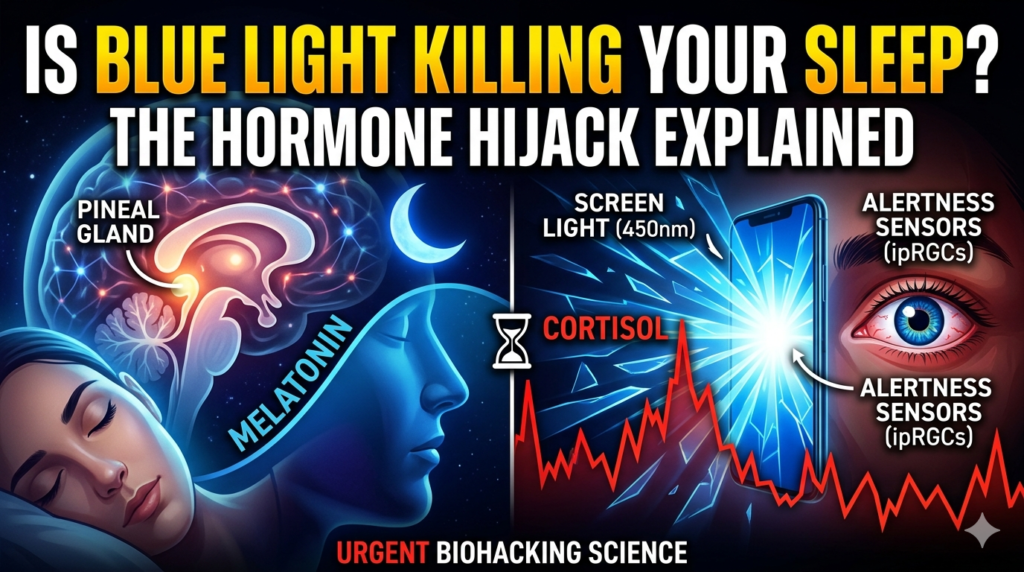
In an era where our eyes are glued to digital displays from dawn until long after dusk, we are inadvertently conducting a massive biological experiment on our brains. The artificial blue light emitted by your smartphone and laptop isn’t just causing eye strain; it is actively hijacking your endocrine system and dismantling your sleep-wake cycle. Understanding the molecular impact of short-wavelength light is no longer a niche interest for biohackers—it is a fundamental necessity for anyone seeking peak cognitive performance and long-term metabolic health.
Key Takeaways
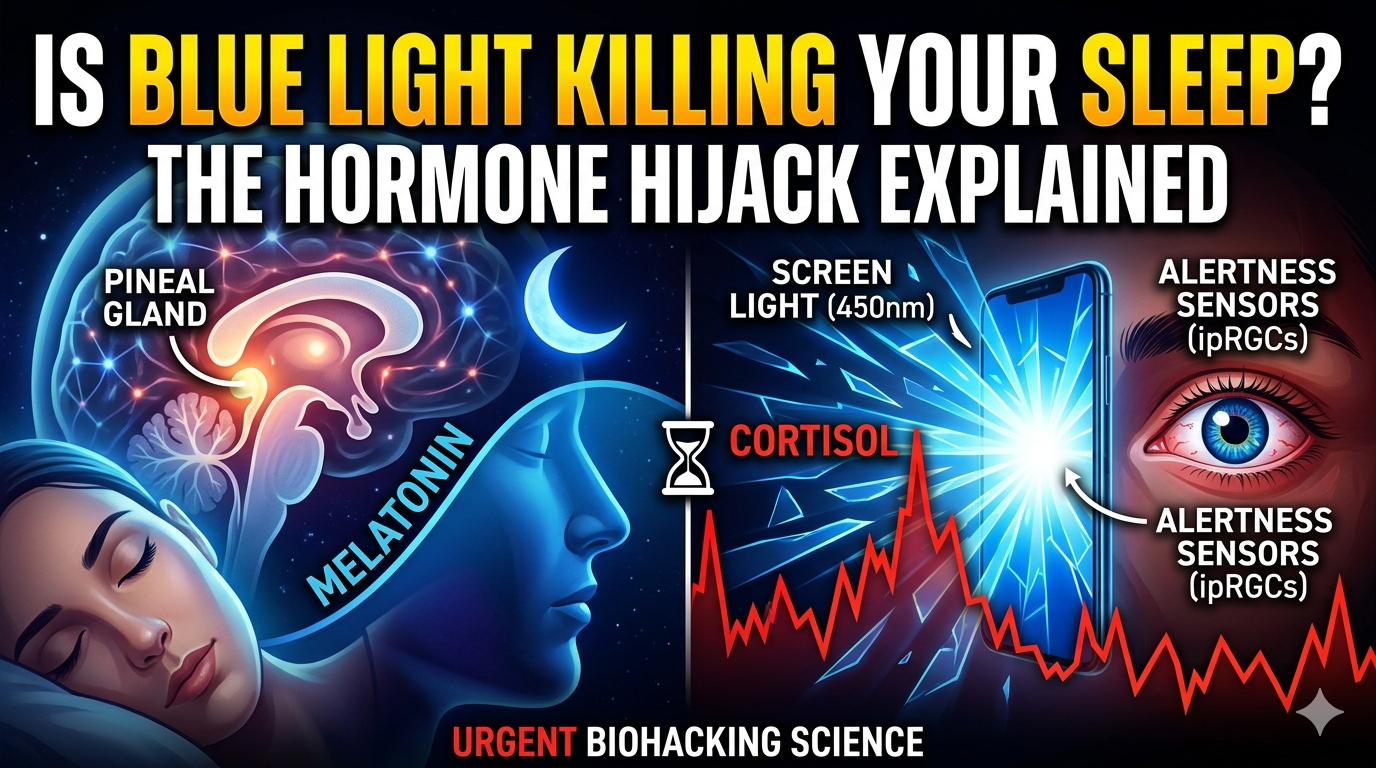
- Melatonin Suppression: Exposure to blue light (450-480nm) inhibits the pineal gland’s production of melatonin, delaying sleep onset by up to 90 minutes.
- Circadian Disruption: Chronic nocturnal light exposure is linked to metabolic disorders, obesity, and cardiovascular issues.
- The 2-Hour Rule: Experts recommend a digital sunset—blocking blue light at least 120 minutes before bedtime—to restore natural hormonal flow.
- Cortisol Spikes: Artificial light at night can trigger untimely cortisol release, leading to “tired but wired” syndrome.
The Science of Photoreceptors: Understanding the ipRGCs
To understand why blue light is so disruptive, we must look at the intrinsically photosensitive Retinal Ganglion Cells (ipRGCs). Unlike the rods and cones that help us see images, these cells are specifically tuned to detect light intensity and wavelength to synchronize our internal clocks.
When blue light hits these cells, they send a direct signal to the Suprachiasmatic Nucleus (SCN)—the master clock located in the hypothalamus. The SCN interprets this specific frequency as “noon-day sun,” effectively telling your brain to suppressed melatonin and stay alert. According to research cited by Harvard Health, even dim light can interfere with a person’s circadian rhythm and melatonin secretion.
Hormonal Havoc: Melatonin vs. Cortisol
The circadian rhythm is a delicate dance between Melatonin (the hormone of darkness) and Cortisol (the hormone of alertness). Under natural conditions, cortisol peaks in the morning to wake you up, while melatonin rises in the evening to prepare you for repair.
Artificial blue light flips this switch at the wrong time. By suppressing melatonin, you aren’t just “staying awake”; you are preventing the body from entering the glymphatic clearance phase—a process where the brain flushes out metabolic waste (including amyloid-beta plaques).
Comparison of Natural vs. Artificial Light Impact
| Feature | Natural Sunlight (Full Spectrum) | Artificial Blue Light (LEDs/Screens) |
| Primary Wavelength | Balanced (Red to Blue) | High Peak (450-480nm) |
| Effect on Melatonin | Suppressed only during day | Suppressed even at night |
| Cortisol Response | Natural morning spike | Sustained/Elevated evening levels |
| Circadian Alignment | High (Entrainment) | Low (Circadian Misalignment) |
| Cellular Repair | Promoted via dark cycles | Interrupted |
The Metabolic Connection: Why Your Screen Makes You Fat
It sounds hyperbolic, but the data from Bloomberg Philanthropies’ supported health initiatives and various longitudinal studies suggest a link between circadian disruption and metabolic syndrome. When your master clock is out of sync, your peripheral clocks—found in your liver, pancreas, and adipose tissue—also lose timing.
This leads to:
- Insulin Resistance: Sleep deprivation caused by blue light reduces insulin sensitivity.
- Leptin/Ghrelin Imbalance: You feel hungrier and less satisfied, leading to late-night snacking.
- Reduced Lipid Metabolism: Your body becomes less efficient at burning fat during the night.
Mitigation Strategies: How to Protect Your Biology
You don’t have to live in a cave to fix your circadian rhythm. Effective blue light management involves a layered approach.
1. The Digital Sunset
The most effective method is complete avoidance. Experts suggest a “Digital Sunset” where all screens are turned off 2 hours before bed. This allows the natural “dim light melatonin onset” (DLMO) to occur.
2. Blue Light Blocking Glasses
Not all “computer glasses” are created equal. For circadian protection, you need amber or red-tinted lenses that block 100% of wavelengths below 500nm. Clear “anti-reflective” coatings are often insufficient for nighttime hormonal protection.
3. Software Interventions
Applications like f.lux or native “Night Shift” modes shift the color temperature of your screen. While helpful, these do not eliminate the intensity of the light, which can still stimulate the ipRGCs if the brightness is too high.
4. Red Light Therapy (Photobiomodulation)
Switching your home lighting to warm, red-spectrum bulbs in the evening can mimic the sunset. Red light has a much lower inhibitory effect on melatonin compared to blue or green light.
The “YMYL” Perspective: A Clinical Warning
As a healthcare-focused analyst, it is vital to note that “blue light” isn’t the enemy—timing is. Blue light during the day is essential for mood, reaction timing, and vitamin D synthesis. However, the American Journal of Preventive Medicine has highlighted that the pervasive use of LEDs has created a “light-polluted” internal environment. Chronic misalignment is now classified as a probable carcinogen by the IARC due to the suppression of melatonin’s antioxidant properties.
Final Verdict: Optimization for the Modern Professional
The impact of blue light on your circadian rhythm is not just a matter of “getting a good night’s sleep.” It is about protecting your DNA, maintaining your metabolic health, and ensuring your brain functions at its highest capacity. If you are serious about your health and your career, you cannot afford to ignore the light entering your eyes.
Ready to Reclaim Your Sleep?
Don’t wait until you’re burnt out and metabolically compromised. Start your “Digital Sunset” tonight. Turn off the overhead LEDs, put on your amber-tinted glasses, and give your pineal gland the darkness it deserves.
[Subscribe to our Vital Guide Newsletter for more science-backed biohacking protocols and elite performance tips.]
References:
- Harvard Health Publishing: Blue light has a dark side.
- Journal of Clinical Endocrinology & Metabolism: Melatonin suppression and circadian phase shifting.
- Bloomberg Health: The global rise of metabolic disorders and environmental triggers.