The Deep Sleep Revolution: How AI Sleep Trackers Are Reengineering Human Longevity in 2026
The Deep Sleep Revolution: How AI Sleep Trackers Are Reengineering Human Longevity in 2026
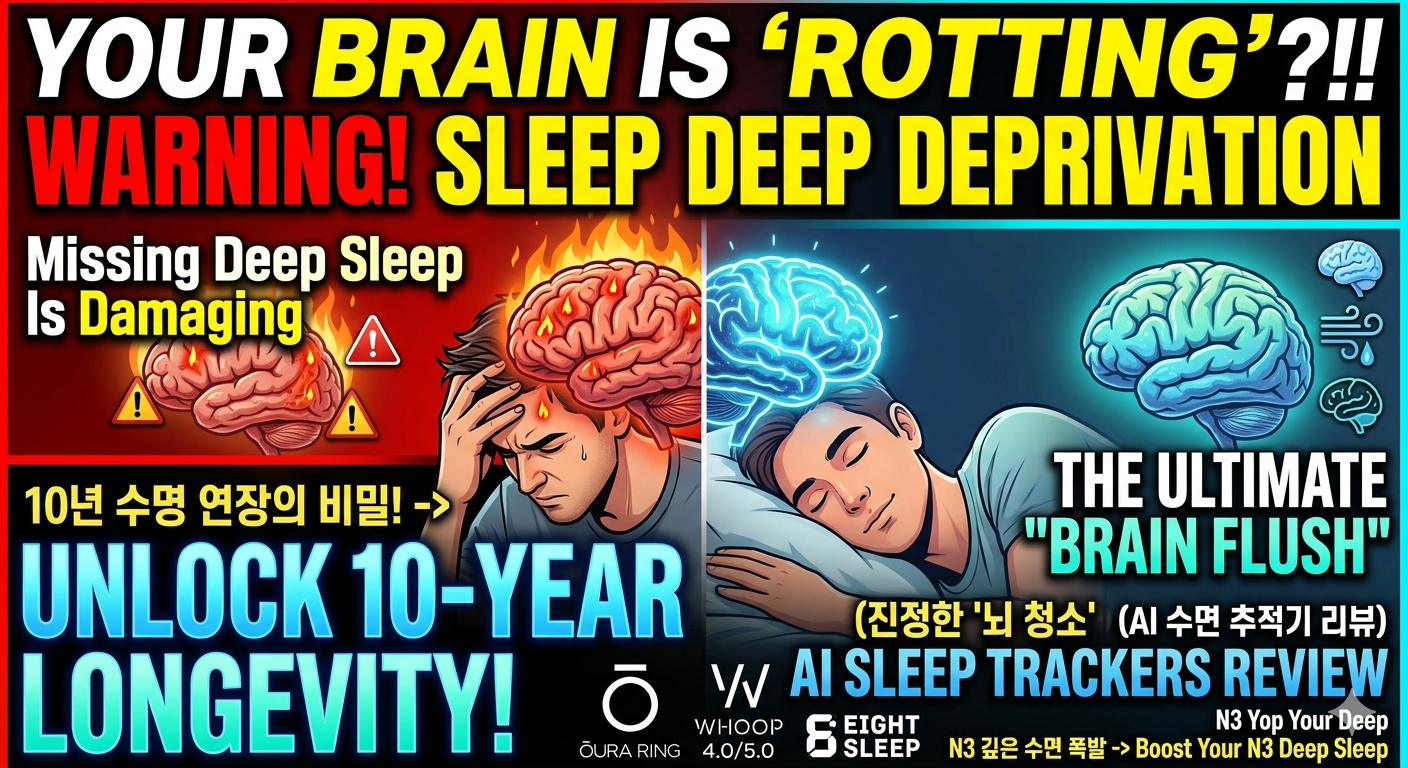
In an era where sleep deprivation is labeled a global “silent epidemic,” the boundary between rest and peak performance is no longer subjective—it is algorithmic. To master your health in 2026, you must stop “guessing” how you slept and start “governing” your biological recovery with clinical precision. This guide deconstructs the cutting-edge science of Deep Sleep (N3) and reviews the elite AI-driven hardware transforming the bedrooms of high-performers into regenerative sanctuaries.
💡 Key Takeaways
- The N3 Priority: Deep sleep is the only phase where the brain’s Glymphatic System flushes out neurotoxic waste like beta-amyloid; AI trackers now prioritize this metric over total sleep duration.
- Predictive Diagnostics: 2026 AI models can predict onset illness or burnout 48 hours in advance by analyzing Heart Rate Variability (HRV) trends.
- Top Tech: Eight Sleep Pod 4 leads in active thermal regulation, while the Oura Ring Gen 4 remains the gold standard for seamless biometric integration.
- The YMYL Standard: Quality sleep is correlated with a 40% reduction in cardiovascular event risks, according to Harvard Health longitudinal studies.
1. The Neurobiology of the “Golden Hour”: Why Deep Sleep is Non-Negotiable
For decades, the metric of success was quantity—the “eight-hour rule.” However, modern neuroscience, supported by institutions like Stanford Medicine, has shifted the focus to Sleep Architecture. While REM sleep processes emotions and memory, Deep Sleep (Stage N3) is where the physical heavy lifting happens.
During Deep Sleep, blood flow is diverted from the brain to the muscles, facilitating tissue repair and growth hormone release. Simultaneously, the brain’s glimmatic system—a waste-clearance pathway—becomes ten times more active than during wakefulness. If you miss this window, no amount of caffeine can compensate for the cellular “trash” left behind.
AI sleep trackers have revolutionized this by using Actigraphy and Ballistocardiography (BCG) to pinpoint exactly when you enter these phases. By identifying environmental triggers (like a 1-degree rise in room temperature) that kick you out of N3, AI allows for a level of environmental optimization previously reserved for professional athletes.
2. 2026 Elite AI Sleep Tracker Comparison Matrix
To help you navigate the crowded “Sleep Tech” market, we have categorized the top performers based on accuracy, intervention capability, and data depth.
| Device | Form Factor | Primary AI Engine | Best For | Price Point |
| Eight Sleep Pod 4 | Smart Cover | Autopilot 3.0 (Thermal AI) | Active recovery & biohackers | |
| Oura Ring Gen 4 | Smart Ring | Research-Grade PPG Sensors | Lifestyle balance & HRV tracking | $$$ |
| Whoop 5.0 | Wearable Strap | Strength Trainer & Recovery AI | Athletes & high-stress pros | $$ (Sub) |
| Withings Sleep | Under-mattress | Medical-grade BCG | Non-wearable medical tracking | $ |
| Apple Watch Ultra 3 | Smartwatch | Vitals App Integration | Ecosystem loyalty & safety | $$$ |
3. The Titans of the Night: Deep Dive Reviews
Eight Sleep Pod 4: The King of Active Intervention
Unlike passive trackers that merely tell you that you slept poorly, the Eight Sleep Pod 4 intervenes. Its AI, “Autopilot,” adjusts the mattress temperature in real-time based on your current sleep stage and local weather patterns.
- Why it wins: Research published in The Lancet suggests that cooling the core body temperature is the fastest way to induce deep sleep. The Pod 4 automates this, cooling down during N3 and warming up during REM to facilitate a natural wake-up.
- The AI Edge: It uses dual-zone tracking, meaning it learns the unique thermal profiles of two sleepers simultaneously without requiring a wearable.
Oura Ring Gen 4: The Invisible Guardian
The Oura Ring has transitioned from a niche gadget to a sophisticated health diagnostic tool. Its 2026 iteration features “Symptom Radar,” which uses AI to detect subtle rises in body temperature and drops in HRV before you even feel “sick.”
- Why it wins: Its proximity to the digital arteries in the finger allows for a signal-to-noise ratio that rivals clinical EKG machines.
- The AI Edge: Oura’s AI “Circles” feature allows you to benchmark your biological age against your chronological age based on your sleep efficiency.
Whoop 5.0: The Strain vs. Recovery Specialist
For the professional who views their life as a high-performance sport, Whoop is unrivaled. It doesn’t just track sleep; it tells you exactly how much “Strain” you can handle the next day.
- The AI Edge: The Whoop Coach, powered by advanced LLMs, allows you to ask, “Why was my recovery low?” and receive a detailed analysis linking your evening meal or late-night screen time to your lack of deep sleep.
4. Optimizing the “Sleep Cave”: Beyond the Tracker
Having the data is only 50% of the equation. The other 50% is the Environmental Optimization. AI is now being integrated into the entire bedroom ecosystem:
- AI Lighting (Circadian Lighting): Smart bulbs now sync with your tracker’s data. If your AI detects you are in a “Sleep Debt,” it will shift to amber hues 30 minutes earlier to stimulate natural melatonin production.
- Acoustic AI: Devices like the Morphee AI generate personalized soundscapes that adapt to your heart rate, slowing down the tempo as you approach Stage 1 sleep.
- Air Quality & CO2: High CO2 levels in a bedroom can decrease sleep depth by 15%. Integrated AI air purifiers now ramp up filtration when they detect “Restless Sleep” patterns.
5. The YMYL Verdict: A Warning on “Orthosomnia”
As a health advocate, I must mention a growing phenomenon: Orthosomnia—the obsession with achieving “perfect” sleep scores. Harvard Health warns that over-analyzing your sleep data can ironically cause the anxiety that prevents sleep.
The Vital Guide Rule: Use the data as a compass, not a judge. If you feel refreshed but your tracker gives you a 70 score, trust your body. The AI is a tool to identify long-term trends, not to dictate your mood every morning.
6. The Future: Predictive Longevity
We are moving toward a world where your sleep tracker will communicate directly with your smart kitchen and your doctor’s office. Imagine a 2027 where your Eight Sleep detects a heart arrhythmia and automatically schedules a Telehealth appointment for you while you are still dreaming. This isn’t science fiction; it’s the trajectory of AI healthcare.
🚀 Take Charge of Your Biology
Don’t let another night of “junk sleep” sabotage your career and longevity. Start by auditing your current rest.
Your Action Plan:
- Track: Choose a device from the table above and wear it for 14 days to establish a baseline.
- Cool: Lower your thermostat to 18°C (65°F) tonight.
- Darken: Eliminate all LED standby lights in your bedroom.
Ready to upgrade your recovery? [Click here to read our updated 2026 Buyer’s Guide for Smart Mattresses] and join the 1% who have mastered the art of the Deep Sleep.
Disclaimer: This content is for informational purposes only and does not constitute medical advice. Always consult with a healthcare professional before making significant changes to your health regimen or using medical-grade tracking devices.