The Second Brain Secret: Is Your Gut Microbiome Hijacking Your Mental Health?
The era of treating the mind and body as separate entities is officially over. Emerging neuroscience confirms that your “gut-feeling” isn’t just a metaphor; it is a sophisticated biochemical dialogue known as the Gut-Brain Axis. If you are struggling with persistent anxiety or brain fog despite traditional interventions, the culprit might not be in your head—it’s in your microbiome.
Key Takeaways
- The Vagus Nerve Highway: 90% of serotonin and 50% of dopamine are produced in the gut, not the brain.
- Inflammation & Mood: “Leaky gut” leads to systemic inflammation, a primary driver of clinical depression.
- Psychobiotics: Specific probiotic strains can mimic the effects of anti-anxiety medication without the side effects.
- Actionable Diet: High-fiber, fermented foods are the most potent tools for neuroplasticity.
1. The Science of the Gut-Brain Axis (GBA)
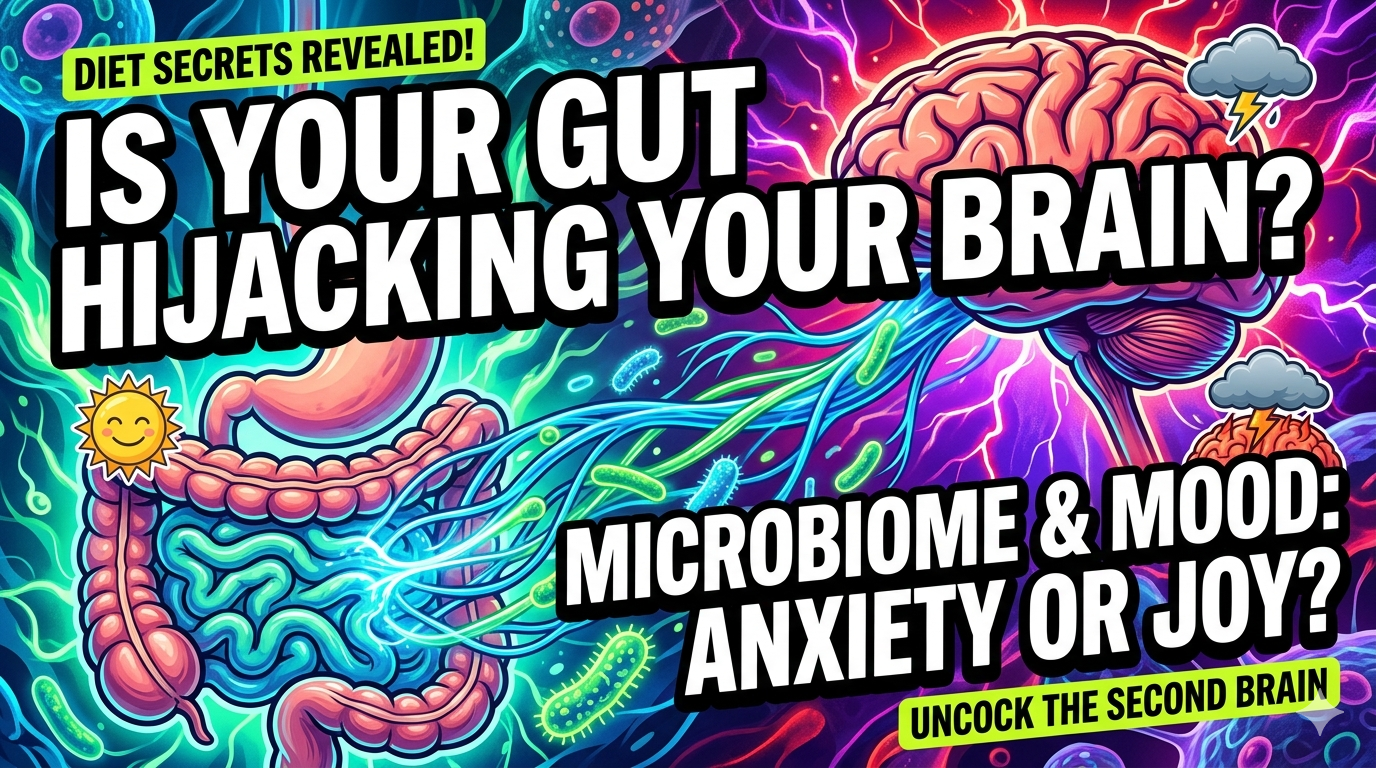
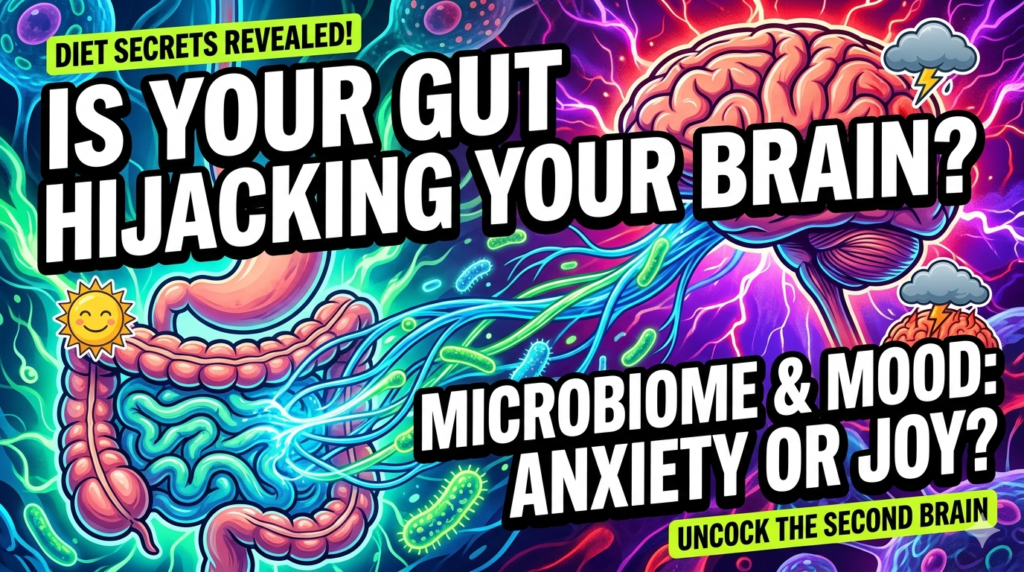
The Gut-Brain Axis is a bidirectional communication network linking the enteric nervous system (ENS) and the central nervous system (CNS). This isn’t just a physical connection; it involves complex hormonal and immunological signaling.
The Vagus Nerve: The Information Superhighway
The Vagus Nerve acts as the physical bridge. According to research cited by Harvard Health, approximately 80-90% of the fibers in the vagus nerve are afferent, meaning they carry information from the gut to the brain. When your microbiome is in a state of dysbiosis (imbalance), it sends “distress signals” that the brain interprets as anxiety or low mood.
Neurotransmitter Production
It is a common misconception that neurotransmitters are exclusive to the cranium.
- Serotonin: Critical for mood regulation. Most of it is synthesized by gut bacteria.
- GABA: An inhibitory neurotransmitter that calms the nervous system. Strains like Lactobacillus and Bifidobacterium are prolific GABA producers.
2. Depression, Anxiety, and the “Leaky Brain”
Modern medicine is increasingly viewing depression through the lens of The Cytokine Theory of Depression. When the gut barrier is compromised (Intestinal Permeability), lipopolysaccharides (LPS)—toxic bacterial byproducts—leak into the bloodstream.
This triggers a systemic inflammatory response. These inflammatory cytokines can cross the blood-brain barrier, leading to “neuroinflammation.” This state is characterized by lethargy, social withdrawal, and anhedonia. As Bloomberg Health recently reported, the global pharmaceutical industry is pivoting toward “psychobiotics” as the next frontier in psychiatric care.
Comparative Impact: Gut Health vs. Mental State
| Factor | Biological Mechanism | Impact on Mood |
| Short-Chain Fatty Acids (SCFAs) | Produced by fiber fermentation; strengthens the blood-brain barrier. | Reduces anxiety & improves stress resilience. |
| Cortisol Production | High stress alters gut acidity, killing “good” bacteria. | Creates a feedback loop of chronic stress. |
| Microbial Diversity | A wide variety of species ensures balanced neurotransmission. | Prevites “Major Depressive Disorder” (MDD) symptoms. |
| LPS Endotoxins | Leaks through gut wall into the blood. | Causes brain fog and “sickness behavior.” |
3. The “Psychobiotic” Diet: Eating for Dopamine
If you want to heal your mind, you must fertilize your internal garden. The Western diet—high in emulsifiers and refined sugars—acts like a herbicide for your beneficial bacteria.
Step 1: Prebiotic Load
Prebiotics are non-digestible fibers that act as fuel for your microbes. Focus on:
- Inulin-rich foods: Jerusalem artichokes, garlic, and onions.
- Resistant Starch: Green bananas and cooled potatoes.
Step 2: Probiotic Inoculation
You need “live” reinforcements. The British Medical Journal (BMJ) has highlighted that fermented foods significantly lower social anxiety scores in young adults.
- Kefir & Kombucha: High-potency liquid probiotics.
- Kimchi & Sauerkraut: Rich in Lactobacillus strains that assist in GABA production.
4. Lifestyle Interventions for GBA Optimization
Beyond diet, the Gut-Brain Axis is sensitive to your environment and circadian rhythm.
- Intermittent Fasting (16:8): Allows the “Migrating Motor Complex” (MMC) to sweep the gut clean, preventing SIBO (Small Intestinal Bacterial Overgrowth).
- Vagus Nerve Stimulation: Deep diaphragmatic breathing and cold exposure (cold showers) stimulate the vagus nerve, sending “safety” signals to the brain.
- Polyphenol Consumption: High-quality dark chocolate (85%+) and blueberries contain polyphenols that favor the growth of Akkermansia, a bacteria linked to lean body mass and positive mood.
5. Critical Evidence from Global Institutions
The shift toward GBA-focused therapy is backed by rigorous clinical data:
- The Mayo Clinic has published studies showing that fecal microbiota transplants (FMT) in animals can literally transfer depressive symptoms from one subject to another, proving the microbiome’s causal role in behavior.
- Johns Hopkins Medicine refers to the ENS as the “Second Brain,” noting its role in the effectiveness of antidepressants like SSRIs, which often cause GI side effects because they target the same receptors in the gut.
Conclusion: Take Control of Your Biology
Your mental health is not a static destiny—it is a dynamic reflection of your internal ecosystem. By shifting your focus from “fixing the mind” to “nourishing the gut,” you tap into a biological lever that can radically transform your quality of life.
Stop treating the symptoms and start healing the source. Your microbiome is waiting for your instructions.
Ready to Biohack Your Happiness?
Join our ’21-Day Microbiome Reset’ Newsletter. Receive weekly, science-backed meal plans and expert protocols designed to crush anxiety and skyrocket your cognitive performance.
[Subscribe to the Vital Guide Newsletter Today]